Why It's Better

Beef worth knowing.

Good beef is more than a label on shrink-wrap. Here's an honest, plain-spoken look at how our F1 Wagyu is bred, raised, and finished — and why it eats so differently from what's in the grocery case.

F1 Wagyu Genetics Grass-Fed No Added Hormones Full Traceability Pasture to Plate

The Genetics

What is F1 Wagyu?

"F1" simply means first generation. It's the very first cross between two breeds — in our case, a full-blood Wagyu bull bred to a quality, hardy base cow. The calf inherits half its genetics from each side.

That cross is the sweet spot. Wagyu is famous for fine, even marbling and remarkable tenderness, but pure Wagyu can be slow-growing and delicate to raise. Pairing it with a sturdy mother cow keeps the calf healthy and well-suited to life on Texas pasture — while still carrying the marbling and buttery texture Wagyu is known for.

The result is beef that's genuinely special on the plate, raised by animals that thrive in the field. You get much of the magic of Wagyu in a form a small family ranch can raise honestly and well.

Wagyu bull

Marbling & tenderness

+

Quality cow

Hardiness & health

The result

F1 Wagyu

First-generation cross — exceptional marbling, raised practically on pasture.
How They're Raised

Grass-fed & no added hormones.

Two short phrases that change everything about what ends up on your plate — and what doesn't.

Grass-fed, on real pasture

Our cattle eat the way cattle were built to eat — grazing open grass through the seasons. A natural, forage-based diet means a cleaner, more honest flavor and beef with a deeper, beefier character than grain-rushed commodity cattle.

It's slower. It takes more land and more patience. But it's the difference between beef that tastes like somewhere and beef that tastes like nowhere.

No added hormones

We never use added growth hormones to push our animals to weight faster. They grow at their own pace, the way nature intended — which is better for the animal and better for what you're feeding your family.

When you serve our beef, you know exactly what's in it: beef. Nothing added to hurry it along, and nothing you have to wonder about.

Side by Side

Rigid Ranch vs. the grocery case.

No villains here — commodity beef feeds a lot of people. But it's built around volume, distance, and shelf life. Ours is built around flavor, transparency, and the family that raised it. Here's the honest comparison.

Rigid Ranch

Our way
  • Source & traceabilityOne small herd you can name, raised in Van Alstyne, TX. You know the land and the people.
  • GeneticsF1 Wagyu cross bred for marbling, tenderness, and flavor.
  • DietGrass-fed on open pasture, finished with care — never rushed in a feedlot.
  • Hormones & additivesNo added growth hormones. Nothing in the meat but beef.
  • Freshness & processingLocally processed, then vacuum-sealed and frozen at peak — no long-haul shipping or display-case aging.
  • How it's soldBy the quarter, half, or whole — a freezer full of premium cuts, custom to your sheet.

The grocery case

Commodity
  • Source & traceabilityOften blended from many animals and feedlots; origin is rarely something you can trace.
  • GeneticsCommodity breeds selected for fast, efficient growth and volume.
  • DietTypically grain-finished in large feedlots to hit weight quickly.
  • Hormones & additivesAdded hormones are common, and cuts may be treated to extend shelf life.
  • Freshness & processingShipped long distances and held in the case — days or more between cutting and cooking.
  • How it's soldBy the package, at retail markup, with no say in how it's cut.
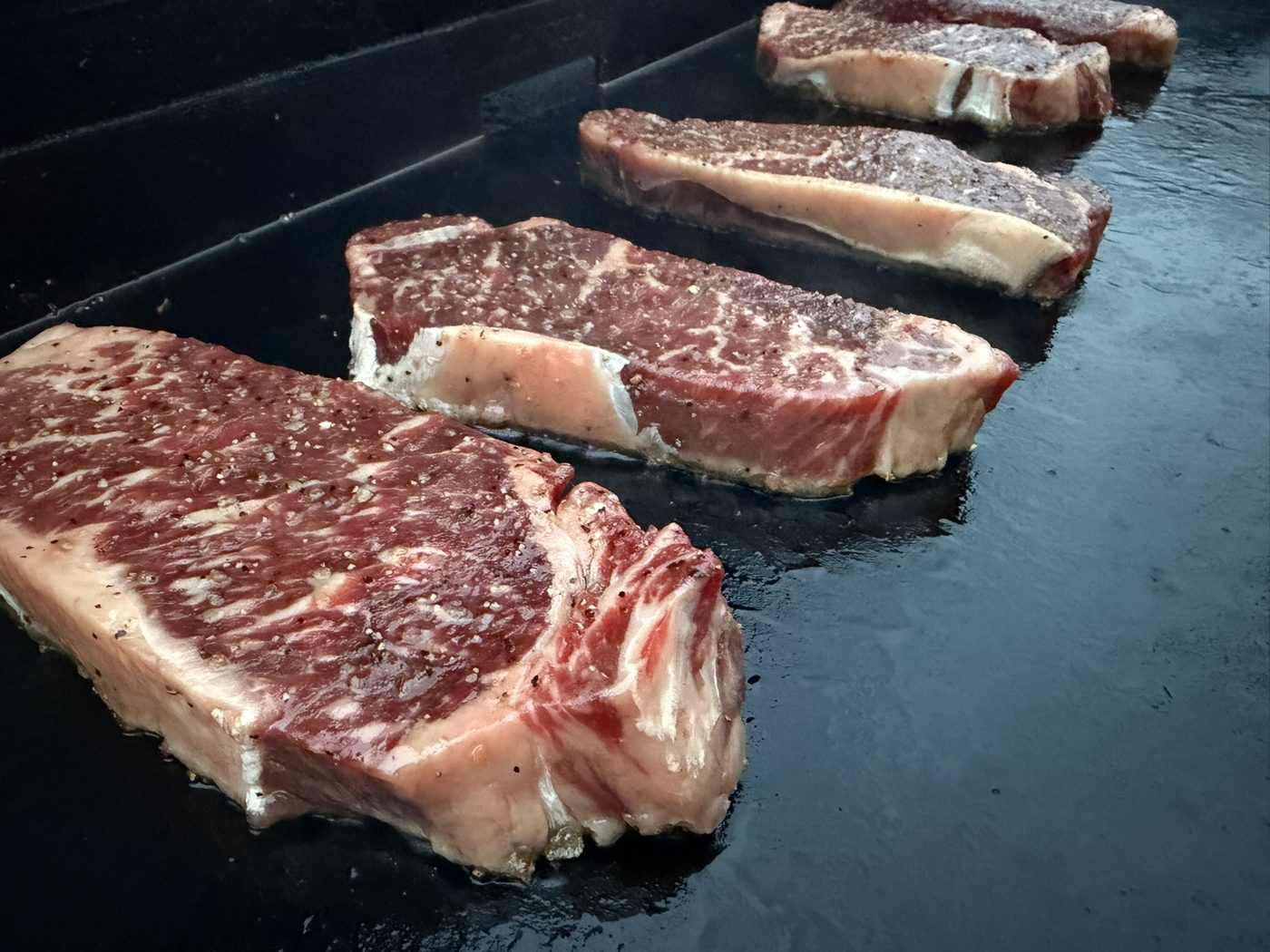
Close-up of the fine marbling in Rigid Ranch F1 Wagyu strip steaks

On the Plate

Marbling & flavor.

Look closely at a great steak and you'll see fine threads of white woven through the red. That's marbling — intramuscular fat — and it's the single biggest reason F1 Wagyu eats the way it does.

As the steak cooks, that fat melts and bastes the meat from the inside. The payoff is a buttery, tender bite and a rich, lingering flavor — a world apart from the lean, sometimes dry texture of commodity cuts bred for leanness and speed.

You don't need a special occasion or a steakhouse to taste it. It's the kind of difference you notice on the first forkful, at your own kitchen table.

The Journey

From pasture to your freezer.

Four steps, no mystery in between. This is the whole path your beef takes — start to finish.

  1. 01

    Raised on pasture

    Calves grow up grazing open grass on our family land, given room, time, and daily attention.

  2. 02

    Finished with care

    No rush, no feedlot. We finish each animal patiently so the marbling and flavor develop fully.

  3. 03

    Locally processed

    Cut nearby by a trusted partner butcher — to your custom sheet, exactly how you like it.

  4. 04

    Vacuum-sealed & frozen

    Sealed at peak and frozen for you — ready to pick up in Van Alstyne and stock your freezer.

Good Questions

Myth vs. fact.

The honest answers to the things people most often ask us before their first order.

Is grass-fed tougher?

It can be when it's rushed or overcooked — but that's not the whole story. Our F1 Wagyu genetics bring real marbling and tenderness, and we finish our animals patiently so the meat develops properly. Cooked with a little care, our grass-fed beef is tender and rich, not chewy.

How much freezer space do I need?

A rough rule of thumb: figure about one cubic foot of freezer space for every 35–40 pounds of packaged beef. A quarter share fits comfortably in a standard chest or upright freezer; a half or whole is best with a dedicated deep freezer. Tell us your setup and we'll help you size your share.

What does "F1 Wagyu" mean again?

F1 means first generation — the first cross between a full-blood Wagyu bull and a quality base cow. The calf gets Wagyu's signature marbling and tenderness while staying hardy and well-suited to pasture life. It's the practical sweet spot between elite genetics and real-world ranching.

Is bulk beef actually cheaper?

Per pound, buying a share is generally a strong value — you're paying closer to the source instead of retail markup, and you get premium and everyday cuts in one price. It's a larger purchase up front, but it stocks your freezer for months. The bigger the share, the lower the cost per pound.

How long does it keep frozen?

Because every cut is vacuum-sealed, our beef keeps its quality in the freezer for roughly a year — often longer for larger cuts and roasts. Vacuum sealing protects against freezer burn far better than store wrap, so it tastes fresh long after the day you pick it up.

Where do I pick up?

Pickup is in Van Alstyne, Texas. Once your share is processed and ready, we'll coordinate a time that works for you. Bring a cooler or two and we'll help you load up — it's a good chance to meet the folks who raised your beef.

Ready When You Are

Ready to taste the difference?

Tell us a little about what you're looking for and we'll follow up with availability, pricing, and next steps. No pressure — just a conversation.